July 8, 2026
Welcome to Perspectives, a signature podcast series from The Leerink Center for Pharmacoeconomics. Hosted by Dr. Mel Whittington, a health economist and Head of the Center for Pharmacoeconomics, we will be hearing from individuals across the industry to better understand and appreciate the societal impact of healthcare innovations.
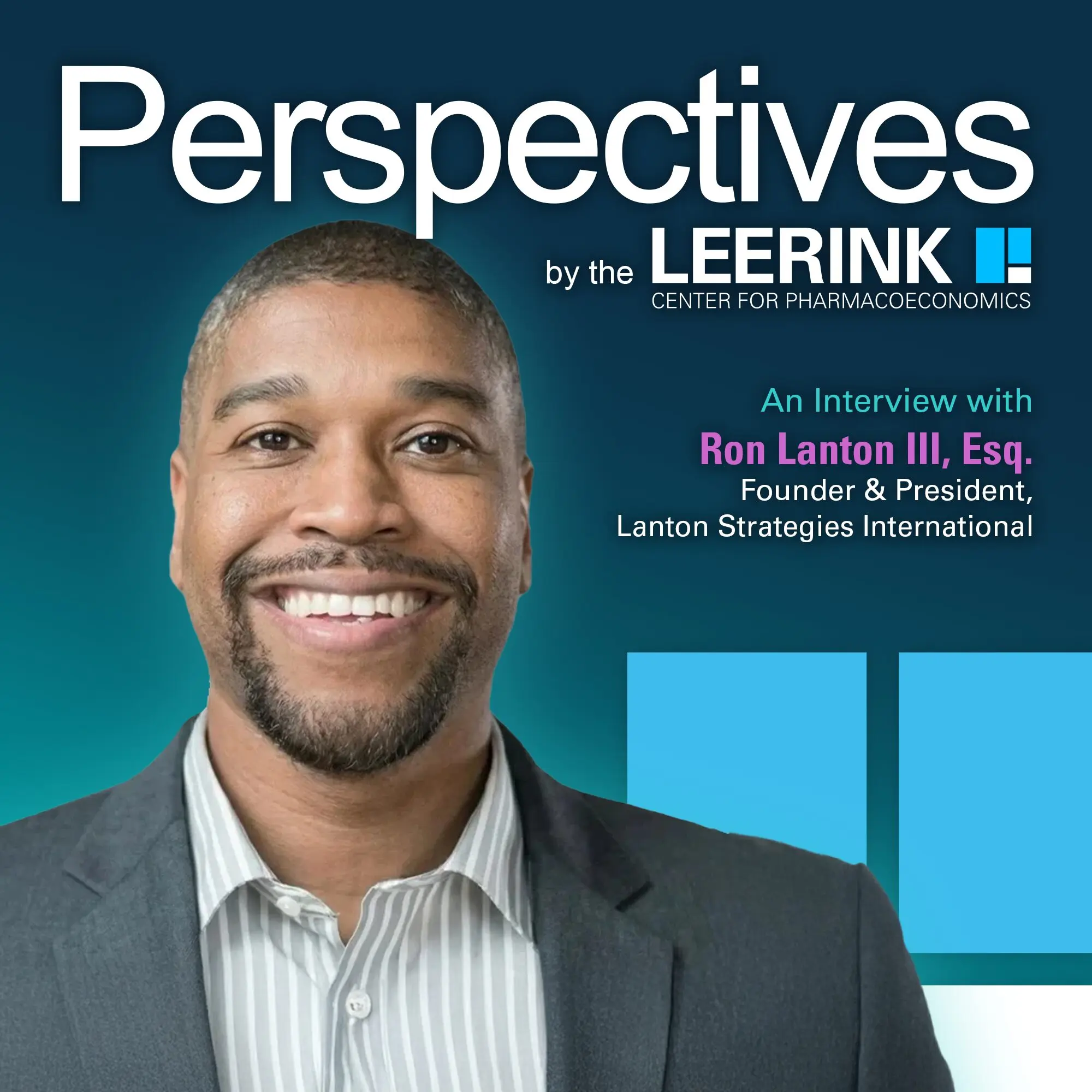
Melanie Whittington: Welcome back everyone. We have another great episode for you that is both timely and relevant. Last month, June 2026, the US Trade Representative launched a section 301 investigation into Germany’s pharmaceutical pricing and reimbursement practices. And if you’re anything like me, you’ve heard of this, but you don’t really know what this means or what the outcomes could be? So, in today’s episode, we’re going to get into exactly that. We’re going to talk about what this means and then discuss potential implications for biotech executives and investors. Joining me to talk about this is Ron Lanton, President of Lanton Strategies International. Ron is a US licensed attorney and regulatory strategist who advises companies and investors on policy environments across the EU, UK and the US. So, I can’t wait to learn from him. Ron, thanks for coming on the podcast.
Ron Lanton: Well, thank you for the invite. I’m ready for the conversation.
Melanie Whittington: Okay, so I met you last year when we were on a panel together about Most Favored Nation or MFN, and I thought your expertise was fascinating and extremely relevant for this podcast audience. So, can you kick us off by telling us a little bit about you, your background, and how you became focused on transatlantic pharmaceutical policy and pricing?
Ron Lanton: Yeah. It’s not something you fall into just last night, right? Like it’s a series of on purpose decisions. So, my whole life, I’ve always been a lobbyist. I started off very young. I went to law school to really understand the technical nuances about why do we put the “and” and the “or”, the “may” and the “shall”? But my whole philosophy was about not being confined to a box about things that you could do or couldn’t do. I always thought maybe we should just change things, or whatever it was that fit a particular agenda. And I think that people had a hard time realizing that you can do a lot of different things with lobbying. I think people have this like mindset like well, you need a big PAC or you need millions of dollars, or I’m an innovator, but I don’t trust working with my competitors to help me. And these are things that I really had to tell different companies about like, hey, look, if you’re trying to get here, you’re going to need some help, you know, and yeah, it may be to where you still have to compete. You may have created a lane for your competitor, but you’re still going to be okay. And these are, you know, this is how you’re going to be okay. And then when people started realizing, I can get further with working with other people. I don’t need millions of dollars. That was the thing that helped. But I think after that, I realized I was still missing something, right? I was looking for that next thing. So, my wife, who is my current partner in my law firm, she says, well, um, you know, why don’t you create a law firm? And just these people are asking you, you know, what’s this? What’s that? Just, just do it. And I said, okay. And I think this was not, not any worse for the wear after 2016. And I’m not trying to be political and saying this person should have been or this person should have been. But the laws started to change, and people had questions about the administration. And it’s like, well, can this work? Can they do these things? And regardless if you, you know, if you agree with the Trump administration, if you don’t, he’s a disrupter and companies still have to deal with that, right? Like it doesn’t matter who’s in office, you’ve got to deal with the climate. So that’s where I started getting the comfortableness and saying, okay, yeah, not only can we lobby this and try to change this, but less from a risk management, think about these things you have to do. So, I knew after 2016, the world changed, because, you know, we had a set of rules that, you know, since 1945 that the world kind of operated by. The United States was going to lead everything. It’s just this administration said the United States is going to lead in a different way. And we’re not going by those set of goals and things that we did before. We’re going to look at the next step, and it took people by surprise. They’re like, well, law doesn’t normally do that. And you know, like, can we? And what happens if, and that was a lot of risk management and strategy. And I knew at that point, you know, it wasn’t going to be the same anymore. So, we had started thinking internally about, how do we become more global. And, you know, does that involve moving somewhere or does it not? And we didn’t do this overnight. I’m talking to you right now in Amsterdam in our in our global office. But we still have our offices stateside. It’s just that, you know, different people are thinking about different things. So, 2020 happened, Joe Biden came in, he became president. But a lot of conversations that we were hearing from people overseas were, is this the real United States? Is this the real you? Are we going to go back and do what the last administration did, or are we back to this 1945 scheme? We don’t know.
Melanie Whittington: So, are the rules still changed, or have we gone back to prior to the rules being changed?
Ron Lanton: Exactly, exactly. And I kept telling people it shouldn’t matter at this point because there was a change. It’s how are you going to prepare for it? And then when the last election happened, it was, okay, we’re going back to this. So now people have to start thinking more strategically. It’s like, okay, we know there’s a different set of rules. Do we need to make different friends? Do we need to have different agendas and priorities? Do we need to now think about how do we launch our drugs differently? Do people just think about the drug price? And that’s not true. I know we’re going to get into this.
Melanie Whittington: We’ll get into that for sure.
Ron Lanton: There are a lot of things people have to think about.
Melanie Whittington: Interesting. Well, okay, so that’s even more fascinating than I anticipated. And this whole like changing of the rules I find as a challenge. I’d love to hear your perspective on this, but for biopharmaceutical investment decisions that happen far before any type of commercialization might happen, you kind of have to be thinking about what is the world going to look like if and when I launch my product. And so, I can’t imagine how these, you know, changing of rules and, you know, kind of evolving of rules, how important it is for this audience. And so, do you think there are certain aspects of these changing rules or even of just like European pharmaceutical policy that maybe US based executives and investors often misunderstand or are unaware of or certain conversations you’re having with this audience kind of repeatedly?
Ron Lanton: Yes. And there’s a multitude of ways to answer that question. Why don’t we take the first two and see if we need to go any further than that? I think, first of all, people are now starting to understand, and the reason I say starting to is because you have a large segment of the executive population class, right? C-suite level, really major investors that are saying, okay, in 2028, we’re going to have another election. So, we’ve seen what’s happened twice now. We’ve seen Trump 1 and we’ve seen Trump 2. And Trump 2 has learned definitely from things that the Trump 1 administration could not do. And we’ll talk about 301 and things like that to come up. Can this continue? Because we’ve heard earlier from Dr. Oz that as soon as this administration ends, these most favored nation contracts may not be in place. So as a CEO, do I need to worry about like this is the real future? Yeah, you do. I think the first thing you really have to think about is, one, nothing siloed anymore. Everything used to be very US centric. And now I think people are starting to get nervous that they have to worry about what an agreement looks like in Switzerland versus what an agreement with a biotech company in the US or, you know, anything with CMS as far as reimbursement is. That’s number one. I think number two out of three that I’m going to talk about is when you think about looking overseas at the EU, for example, a lot of people don’t really understand that the EU is not a monolith. It is very national when it comes to pricing, when it comes to reimbursement. You have very different countries that look at things very differently. They value things differently, right? And not only the value system, but just look at the political system. They politically approach things extremely different, right? So, there’s no one real plan. So, I think that people have to understand it’s not a bloc. Yes, it’s a commercial bloc. They negotiate things as commercial bloc. But nationally there’s still things that happen. I think the last point that I’ll talk about and see if you have any questions is most executives say when you deal with the Europeans, it’s about price control. Well, I don’t know if it’s that simple. It’s like a couple of words. They say, well, it’s just all price control. This is the way it is. This is why, you know, it’s priced lower here, but higher in the US because the EU countries have price controls. I started thinking about price controls and say, well, what is that based on? What’s the standard? Because it’s more than that. It’s tied to technology. It’s tied to budgets. It’s tied to insurance systems. It’s tied to national decisions. It’s tied to politics in general. So, we just didn’t get to price control. So that’s where I think it becomes even more important to think strategically. If you are an exec or an investor about where you want to go. What country do you want? And where you want to go brings a different set of questions that you now have to really, really think about.
Melanie Whittington: And do you think in addition to where you want to go, there’s also, well, where can you go? I feel like if you talk to a lot of executives, they want to make sure they have global access for their treatments. And, you know, patients that who need this can get it. But then when there are these differences between countries and a more of a global strategy rather than maybe say, a US centered strategy, I think if you can go there becomes another question.
Ron Lanton: Yeah. And I’m going to complicate it a little more.
Melanie Whittington: Okay, good.
Ron Lanton: If you can go there, true. But what is there and how is there viewed through the US lens? Okay. So yeah, let me bring something in. And it’s going to seem like this is very chaotic. And that is you can’t plan anything. But you can if you look through everything, it’s there. There is a pathway for everything. Okay. So, for example, remember when the administration discussed taking over Greenland? And this sounds insane that I’m going to even bring this up. Okay? But they said take over Greenland. And then a lot of people said, no, that’s not that’s not a good idea. And you actually had several European countries put troops in Greenland. Okay. This happened just a while back. Seems like it was last year, but it really wasn’t. Uh, and we started thinking about this. And so, you’re like, well, what does this have anything to do? It does because as soon as the troops went there, I remember President Trump said, okay, um, we need to talk about the tariffs again and all these agreements that we had. Well, the EU, when they did their 15% agreement, it had pharmaceuticals in it. And at that time, they were still mad at him from another decision that he had made previously. And now this Greenland thing happened and it was a start stop in the EU about whether or not they were going to actually officially accept those 15% tariffs. So, everything went back on the table. So, it’s whether you actually have a deal. And is there something completely unrelated politically that’s going to upset what you already did? Okay. So that’s the first thing. The second thing, I think when we think about things like MFN and the IRA, the Inflation Reduction Act, existing side by side, you’ve got manufacturers that have made their contractual deals under the IRA, but now you have the MFN that says we have to go lower. So, isn’t that a violation of the contract that we already did? And if an executor or an investor has already planned, okay, I’m going to launch in this country based on the IRA pricing. Okay, now I have to worry about MFN. Okay. That changes our conversation with investor relations completely. It changes our reimbursement outlook. And do we now have to think about just geopolitics in general because that Greenland example may come back. It’s already come back. We’ve seen it. So, what’s to stop another situation from coming back? What’s to stop the EU or the UK from doing something that the US doesn’t agree with and say, well, whatever deal we had, that’s no more. So, people have to respond rapidly, you know, for things.
Melanie Whittington: Wow. I do want to turn to the news that prompted me to beg you to come on this podcast. And that is the section 301 investigation into Germany’s pharmaceutical pricing and reimbursement practices. And so, for those of us who do not follow trade policy closely, that definitely includes myself, what exactly did the US government announce?
Ron Lanton: Okay, so the US Trade Representative put out an investigation, and I’ve got my notes here because I want people to really understand what this is. Okay. So, they filed a petition. And what it said was basically they’re going to announce an investigation against Germany, which would be a foreign government, and they’re going to look and see whether or not their laws and trade practices are justifiable, essentially. And they did this. They did this 301 investigation because of what happened with the Supreme Court decision earlier, when the Supreme Court of the United States looked at the Trump administration policies before when it came to trade tariffs, to see whether they were legal. And I know people talked about IEEPA that stands for the International Emergency Economic Powers Act. IEEPA. And in a 6/3 decision, they basically said, look, the president can’t unilaterally put on a tariff. That power to tax comes from Congress. So, what the administration did, they said, hey, we’ve got other ways. When they made several press conferences, we’ve got other ways to make this stick. And nobody really knew what that meant. So now we’re seeing that not only are they using 232 and we can get into that if you want, but they’re also using the combination of 232 now with the section 301, which was there from the Trade Act of 1974, and they’re saying we’re coming at it from two different ways. We want to try to pressure prices to come down in the United States with the 232. But we also want to bring the 301 in here to make it so that the country pays higher prices, so that we in the United States continue to pay lower prices because we feel our innovation and kind of goodwill points that we’re getting for the innovation, we’re not being rewarded with that because these guys are taking advantage of it.
Melanie Whittington: Right, right. And that’s kind of where MFN comes into all of this is if the hope with MFN is to keep pharmaceutical revenues relatively the same, but lower US pricing and raise ex US pricing, that all sounds great if ex US pricing is able to come up. And so, you know, I think there’s a lot of critics of MFN who says, you know, is there really any incentive or any desire for ex-US countries to pay more? It seems like these investigations, the section 301 investigation, could be some of that pressure to potentially pay more.
Ron Lanton: Exactly. And I think to answer your question, just because I gave you a little bit more background than you probably needed for that. But the reason I said that is so that you understand why there was a 301 kind of what it is because in Germany they had recently, um, Federalists, let’s just make it as simple as possible. Federal legislation that just basically said, is there a way that we can get prices lower for Germany through vouchers or rebates? Okay. And the United States is looking at this and they’re saying, well, wait a minute. The whole reason we’re talking about MFN is because there’s this imbalance, right? The imbalance that you guys are taking advantage of, you know, and I think the administration used the term freeloading on our innovation and you’re able to keep things lower. And that’s not fair for us because we’re paying too much. We’re paying your share. So, you need to pay your fair share, essentially. That’s, that’s, that’s how they felt about it. And that’s, that’s what they’ve launched. And it’s the question now is what happens after this? How, how does Germany respond, if at all?
Melanie Whittington: Yeah. And I want to get there, but I have a few questions. Okay, so section 301, I’m assuming it’s been around for a while, but what kind of disputes is it typically done for? And is it relatively novel to use this for pharmaceutical pricing, or has that template existed?
Ron Lanton: No. So, it is done to influence trade. You know, I’m not going to say that I have a specific example, because I don’t want to get into that. Right. Because you get into, well, was it fair? I don’t want to get into that. Let’s just basically say it is something that can be used by the trade representative if there is a feeling that there is some kind of unfairness or uncertainty, or they want to influence trade somehow. That is a tool that they can use. It’s not been used a lot, and it certainly hasn’t been used for pharmaceuticals. So that’s what’s got people wondering, well, okay, we’ve seen China, okay, because it’s been used for China and whether or not, you know, there was tariffs for that. So okay. But for pharmaceuticals itself, that’s different.
Melanie Whittington: That’s the different part.
Ron Lanton: That’s different.
Melanie Whittington: That’s different. Why Germany and why now? You talked about that, but I want to click back on it a little bit more. So, did they announce something different with those rebates? Were they increasing them and by how much?
Ron Lanton: Um they were essentially going to make it so that the manufacturers lowered prices, and if they met certain metrics, there were other things that can happen. So, this is still kind of a work in progress. I don’t want people to think this was something that was set in stone. Yeah. This is like when you hear things in the US Congress about there was a, you know, there’s budget negotiations and they want to put eight billion dollars towards Medicare. Well, we know they probably won’t do that because once it goes through the process, it may be six billion dollars. Right. So, this is still something that was being done. Um, and I think their funding gap that they were trying to close in Germany was around twenty billion euros to get that done. The problem was before the Trump administration objected, you still had other pharmaceutical companies that said, that’s not fair, because they are feeling the heat from the United States, but they’re also still having to create a return for their shareholders. So, they’re stuck in a really bad spot about how do, you know, how do we get out of this one? Um, and then this happened. So, I think the United States just looked at it and they said, well, if you’re doing that, I mean, you already heard how we feel about this through MFN, regardless if there’s legal standards around this, because there aren’t and we can talk about that more if you want. Um, but you know how we feel about this. And now you, you went into this and to me, that puts Germany in a really weird spot, right? I mean, they could, they could listen, they could renegotiate, they could see how far this goes and see if this is something that, you know, the administration is going to really go through. Or it’s going to create a chilling effect for any kind of country itself to, you know, if they’re thinking about these things, do they now have to think, well, what’s the United States going to say about this? What does that do for your borders? Right. Like you are the German government. You’re supposed to be in there for the German people, right? You’re the Swiss government. You’re supposed to be thinking about what’s good for Switzerland, right? Not the United States as far as trade. And I think that is where the administration has found its most leverage is the tariffs and how they go about trade policy to enforce other policies that they want to see worldwide.
Melanie Whittington: Sure, sure. So how do you think German policymakers will respond to this? And has there been any response yet?
Ron Lanton: There has. So there has meaning they’ve walked this plan back a little bit. Okay. Um, so it’s definitely still being discussed.
Melanie Whittington: So, they kind of announced this proposal. Germany announced this proposal that was going to lower drug prices to Germany. And then the section 301 investigation happened. And since, they’ve walked back that a little bit, not all the way, but a little bit.
Ron Lanton: Right, because they did have some opposition from the pharmaceutical companies. I won’t name them. But if you just look in the news, you’ll see who they are. So it’s, it’s a mix of both. So, I think like, like I said, the first thing is Germany could just simply negotiate this with the United States, right. And they can either moderate it, they can bring some pricing proposals, they can say, well, okay, well, maybe we should think about this. And, and maybe they can save face politically by just having that debate internally and then saying, okay, well, this is what we came to rather than, oh, we talked to the United States about it because that’s just not going to give them much leverage as a country. And then, of course, the politics behind that of, you know, the opposing party is going to say, well, you know, you caved and this was supposed to be for the good of, you know, how that stuff plays out. The second way they can deal with this is possibly just talk to the trade representative and see if there’s some kind of remedy or difference, they can do offline. The third thing they can do is, is just not do this at all. And I think that’s very uncomfortable when I was talking about a potential chilling effect, because if you’re supposed to be bringing down budgets and there’s deficit holes that you have to close, you do have to deal with some of these things, regardless of how people think about it. But if you’re handcuffed or you’re so nervous about how the United States is going to feel about it, which the United States is still a very huge market. You know, there’s a lot of innovation that still happens. It’s not like that’s going to go away. There’s people to sell this stuff to. Is it going to make you think twice? I think naturally it would anybody. Right. But then if that happens, I think Germany has to think about the next step, which is if we accept this, that means it’s game on all the time. So, is it just pharmaceuticals now? Is it going to be green energy or something else that the administration may not agree with that you’re doing that we’re now going to be faced with a tariff. Do we have to think about that? And I guess that’s maybe my wider question for the rest of the European Union, for the United Kingdom, for Asia, is if this model sticks, where we’re just going to do a 301, does that mean that’s going to happen to everybody? And think about the potential chaos, not only on a countrywide setting, but just as a publicly traded company. What is that? You know, you really have to think about where you are and what risk you’re okay with.
Melanie Whittington: Well, luckily, they have you to figure this out.
Ron Lanton: It’s yeah, it’s scary. And again, I think the easier thing for some people to think about is this will just go away and that it can’t possibly happen because it’s easier to think like that, right? Status quo. Status quo is over. It’s over. I mean, I know this is totally unrelated, but I mean, you’ve seen the deal that the EU has done with Latin America, that the grocery food deal. You’re going to see more trade agreements like this happen. And it’s going to be more of a shakeup of people that you probably wouldn’t think would do a deal before. Because like I said, after 2016, the world has changed and now people are starting to understand at a fundamental structural level, you know, things are not the same. I mean, look at the United States. I never thought the United States would ever get rid of the Department of Education, but it did. And these are structures that have been around for a very long time. So, I think once people get over the shock value of it, right, and think, okay, this is the new world, and it’s better for me now to become an innovator and chart my own path than have someone try to chart it for me that may not understand my business. That’s, that’s the new normal now. If you’re not thinking like this, if you’re not thinking about, hey, this is what we have to do. What’s the saying in lobbying? If you’re not at the table, you’re on the menu.
Melanie Whittington: I really liked the status quo was over. That was, you know, uh, burned into my brain after you said it. But that’s good too.
Ron Lanton: Yeah, it’s serious. And, you know, I’ve talked to a couple of different, I mean, a Reuters reporter asked me, you know, is this going to go away? And I’m like, no, no, the administration may go away. I mean, it’s going to term out, uh, but, you know, if the next administration, if it’s Republican or Democrat. I mean, you can’t just say this is a Republican idea. Maybe we haven’t seen who the Democrat challenger is going to be and what those policies are, are going to look like. And if it’s either a mix or something, it’s still going to be something from what’s created now because we did get some kind of benefit. I think people are still trying to understand what that is. But, you know, whoever comes in is going to look at that and say, well, did we benefit and should we change things? But we also have changed ourself in the eyes of the world. We are not the same United States as we were. So, what does that mean going forward with our allies, with our trading partners? I think that remains to be seen.
Melanie Whittington: So, thinking about the section 301 investigation into Germany’s pharmaceutical policy practices and, you know, maybe potential other section 301 investigations that are similar that may come in the future. What are the outcomes of such an investigation? Is it tariffs? Are they inevitable? Are there other outcomes and maybe what outcomes would be good or bad for investors and biotech executives?
Ron Lanton: Yeah. Well, I think this is probably the time to actually go a little bit into the 301 investigation, which requires my notes to make sure that everybody is clear. So once the trade representative looks into whether the country’s laws or policies are unjustifiable and they burden US commerce, they can request a formal consultation with the foreign government and they can negotiate. That’s what I was talking about a little bit earlier. They can negotiate. They can have a public hearing. So, in this case, with Germany, there is a public hearing scheduled for September. But I think that people need to understand that there is a public comment period as well. I wrote on this yesterday on our blog. I think it’s August 10th is the comment period. So, I would strongly suggest if you know, if you are a German stakeholder, now’s the time to say something because these comments will definitely impact the hearing that we’re going to see in September. And then after all of that, the trade representative must make a final ruling, which is in about twelve months after the investigation. And they decide two things. First, if there is an unfair trade practice that’s going on after the investigation, and then what should the United States do about it? Right. So, there’s three outcomes. If there is a violation, and they don’t fix it by negotiation or some kind of other remedy, there’s three things. They can impose the tariff. Um, they could place an import restriction or place a quota on certain things. And then they can suspend trade agreements, concessions that they’ve made before. So I think knowing those things, it depends on what your pharma company is and does and whether or not your product has been the subject of any restrictions or anything before, because now you’ve got to go back and look, and it’s not just your company in general, it’s your ingredients because that is something that has been highly overlooked, since if you go all the way back to the Prescription Drug Marketing Act of 1997, when they were trying to put a pedigree on, they were trying to do a chain of custody on drugs, you know, and did this bottle actually come from this manufacturer? And then it did it go to this wholesaler, and did it go to that pharmacy? That’s great. But if we really wanted to know where things came from, we wanted to go to the ingredient level. And that’s very hard to source, right? Because it comes I mean, we know mostly where generics come from. They come from, you know, India, they come from China. But some other things might not come from India and China. You know, there’s other places where ingredients come from. So, it now comes down to looking at everything about your company and trying to figure out, okay, on my checklist, is this impacted by any of these things that the administration, the US administration is talking about?
Melanie Whittington: Wow, that was very helpful to hear kind of what are the possible outcomes and the process, because I think it is important for this audience to understand some milestones that are coming up. But it sounds like there are some as early as next month.
Ron Lanton: I was just going to say, I think that the 232 was also something that we really shouldn’t forget about, because that was really the public face of the tariff was behind the 232 investigation and whether there was a national security interest to have a 232 investigation. So this 301 investigation was ran by the Trade Representative, whereas the 232 investigation is being run by the Commerce Department. So, there are two different people that executives really should look at. So basically, if I’m doing my risk management, okay, what are both of these agencies doing? And do I have relationships with these agencies? Because that’s going to be key going forward. So, you need to have that stuff. And you also need to have relations with the EMA, which is the FDA, the Europe’s version of the FDA. So, you have to be looking at these different regulators and trying to figure out where are your relationships and how can I leverage this to make sure that my outcome is what I want to see? And I think the 232 is really used for more of a domestic onshoring tool to get people to come back to the United States and actually manufacture, whereas the 301 is used for let’s try to make it so that the country, these other countries make the prices higher so that we get a break. Right. And it, it, it also is a way that is untested because as I said earlier, this is a disrupter that you’re dealing with. These schemes together are untested because the 232 alone was not okay. If we combine it with the 301, we’ve not had a Supreme Court decision that says whether or not that’s okay still, because it’s the administration that’s still doing these things, it’s not Congress that’s passing, you know, a tax or saying that this has to happen. So, I still don’t think that’s settled.
Melanie Whittington: Interesting. Okay. So, what I’m hearing is you have to come back on this podcast in a couple months and tell us how everything is shaking out.
Ron Lanton: Yeah, definitely. I would love the invite because I’m sure, and I think even in our last discussion, I said, well, you know, certainly we’ll hear from the GLOBE and the GUARD model by the time we have our interview. And we didn’t. And ironically, I think I saw a notice this week that said that that was going to come out very shortly. So, I’m sure there’s a ton of things that are going to be different next time we speak.
Melanie Whittington: Interesting. Um, maybe before we close, I do want to just dig a little bit more into the implications for biotech investors and executives. And I think you’ve done a beautiful job at integrating that throughout the entire episode. But given I think that’s the main takeaway point for this audience, I’d love to have a standalone section focused on that. So like, why should biotech executives and executives be tracking all of this, building these relationships, thinking about risk management? Is this something only designed for, you know, commercial stage companies or near commercial stage? Or is this something that really is a is an important thought across all phases?
Ron Lanton: I think it’s more the latter. It’s an important thought across all phases. I have yet to see a business owner in this field that says it’s just good enough. You know, I created a company to just be good enough. Most companies want to grow. And I think when you’re seeing all of these cross politics and really complicated laws and very, almost rarely used sections of law like 301 starting to become more normalized, you almost, I mean, you’re, you’re forced to think about these things because now you’re seeing these terms thrown around in the news and then you think, well, how does, you know, most responsible executives, business owners, people that are in the know think, well, what is this? And is this a new threat? And I know that boards are going to want to know about this too, because they have an investment. They have investors everybody has to answer to. Investors are going to really be pushing these publicly traded companies to think about, how are you reacting to this new world? And do I need to invest somewhere else? And where is my return going to be the greatest? And I think that companies are going to need to show more than just the product is okay. I think that they need to do a whole risk analysis to not only investors, but their board, so that everybody is on the same page about the right personnel that you have. Uh, what is the clinical value? What’s the patient impact? You know, how much is this going to save? What’s it going to do to the budget? Are insurers now going to cover this? I mean, we didn’t even talk about how in the United States, at the same time this is going on, that there’s this whole decentralization of vertically integrated companies and how, you know, having a PBM own a retail pharmacy is not okay, or it might not be okay anymore. And we start to see different arguments that I thought were settled back in 2020 with Rutledge versus Arkansas around ERISA. We’re now seeing that come back and see, well, what did they really mean? You know, how far can we push ERISA? Because that’s really been the livelihood of a lot of these payers is to not have regulation. So, I think that companies, now am back to the point, is they’re going to have to show how they fit into all these different universes. And it has to be a connected story. Like I said, it can’t just be this is a curative product. And if you take this, nine out of ten people are going to be cured. I think that’s going to be awesome. It’s going to be great. But where are you launching that? Are you launching that in the US and how are you going to be taxed? And, and, you know, what’s your workforce going to look like? Because that’s another thing that people don’t talk about is the shortage of workforces. You have a lot of people that do digital health. All these AI programs that are going to be coming out, and you just need this piece of software. Somebody’s got to operate the software, and sometimes the software creates redundancies. And if you were working on a workforce shortage and you only had two nurses, and now you’re still there doing four things, and now you’re asking two nurses to do five things because it’s supposed to shorten something down the chain. That’s still a problem. So, there is a lot of things breaking at the same time. And I think that again, if you’re an executive and you’ve looked at this, you’ve looked at your product and you’ve looked at how everything relates. I think that the best way to say this, being over here in the EU, when I go back and forth between DC, Boston and Amsterdam, which is where we are. I’ve learned one important lesson, which is the EU thinks about the collective we. Whereas in the United States we think about the individual. And that’s not to say that, you know, you should be socialist or anything. I’m not saying any of that. What I’m saying is the different value systems. In the US, you know, you have your payer system, and it may not cover certain things. So, some people just don’t get those treatments. And it is a strain on the system because now they’re in the hospital longer for different things and there’s a workforce shortage to deal with those. So, there’s a lot of things over there. Whereas in the EU, it thinks a little bit more about if we do launch something, how does that work on the entire system itself? So, I think that’s the difference. And I think that people need to start thinking about the collective we. Because if our system was disrupted in 2016, where the United States is not going to take care of everything anymore. More countries need to think about how do we survive and what does that mean? So that means teamwork. That means how do we kind of work together? And I mean, to hear conversations about Canada thinking about becoming an EU member. I never would have thought about that prior to 2016. But now that’s the world that we live in. So again, to answer your question, I think that an investor who’s looking to invest needs to think about what are they investing in. Did all these checklists of questions get answered? So, I understand everything there is to know about what could possibly happen. And that’s going to be the responsibility of the company that that investor is investing in. One, they need to ask those questions. But two, these companies need to be prepared that this is the new world. It’s not just risk management on a little bit. This is risk management on a lot. And it’s strategy.
Melanie Whittington: We can’t only think about safety and efficacy and developing products that are safe and efficacious. But also, is there a commercial plan? Where? When? What types of policy risks need to be navigated?
Ron Lanton: And that’s really, I think, going to impact what you see on the marketplace now, because, you know, a company that was doing something for oncology, for example, and was only thinking about that and this, like I said, that thing that cures nine out of ten people. But if it doesn’t check these other boxes, what does that mean? Does it even get to the market? And then if you’re not going to get your R&D costs back and it’s going to be fifteen years instead of twelve, that’s going to make a difference. So, there’s a lot of things now that I think we’re going to be learning about this new era of being a CEO in this term and some of these earnings reports and what some of these questions are going to be.
Melanie Whittington: Right. Okay, one final question for you. And I think the conversation has naturally gone there, but I think it’s probably the most important question. We’ve kind of talked about what this all might mean for investors, executives, but what could this all mean ultimately for patients?
Ron Lanton: I knew you were going to go there. I knew you were going to go there. And I, I should have had an answer prepared ahead of time because I knew where this was going to be. But I think I just got so locked up in the 301. And this, you know, I, I worry about that a lot.
Melanie Whittington: I do too.
Ron Lanton: I worry about it a lot because for so many different reasons and based on where you are, is going to matter. If you are a patient in the EU, I think you’re going to have an easier time, but I don’t even know if that’s certain anymore, because you know, now a company, a biotech company that manufactured things and had a certain price expectation or reimbursement expectation is planning that that might not be there. You know, you had the United Kingdom that, that now has to start increasing prices. The deal that they had for no tariffs in exchange for NHS now increasing their pharmaceutical pricing, that’s a different world. So now as a patient, do you get access to some of that innovative stuff anymore? I don’t know, we have to see. I think in the United States it might be the opposite. What if this does work? You know, I think that we think a lot of the negative about, oh my God, can this happen? What if it does?
Melanie Whittington: What if it does?
Ron Lanton: You know, we’ve seen TrumpRx and, you know, we don’t know how those deals happen. Or what if there is transparency one day and we finally start to see that? And what if there is not that antitrust worry, and this starts to come out and it doesn’t harm patient access. What if it actually improves? Could those numbers go up? But I think overall, I just worry if I’m looking at just one concern. I think it’s just are we going to see innovation as much as we used to? Is it now instead of three companies that are going to try to race to be the person, the lead, the lead person, the alpha, are we just going to see one, you know?
Melanie Whittington: Well and the economic in me is like, what does that mean for competition and pricing and therapeutic competition and preferences.
Ron Lanton: Exactly. But here’s, here’s, here’s something else that’s really going to convolute everything I just said. The clinical trials that are happening in the US and, and the policy changes around clinical trials, what does that mean? And I mean, you’re talking about the future of patient access there. Because if they don’t have the studies, then how do we even get to a, you know, a phase two and a phase three? So are we now instead of companies that used to rely on public funding, they now have to rely on private funding because there’s less of it. And the patient population may not be the same for some of these drugs. So, what happens with that? So, I think the way to answer your question, I worry about the patient. I worry about access. And access can mean all of those little nuances that I just mentioned there. But at some point, we are going to get an answer. But I think we’re going to get that answer once we go down the road. And I think the road that people have to take, the first step is understanding that status quo is gone. This is the new reality. And in order to stay ahead, we need to stay ahead internally in a, you know, in a biotech or in a pharmaceutical company. What are those plans going to look like? How do we stay ahead? And how do we make sure that the patient population that we’re targeting the product that we make is going to be there, it’s going to last a long time. And these rules, now that we looked at the clinical value, the budgets, all that’s going to take, you know, its toll. And we will see there will be an answer.
Melanie Whittington: I don’t think there’s a better way to end the podcast than those closing statements. So, thank you and I want you to come back in a couple months.
Ron Lanton: Definitely. Well, thank you for the invite, I appreciate it. This was a good conversation.
Thank you for listening to this episode of Perspectives. If you’re interested in participating in future podcasts or would like to learn more about the Leerink Center for Pharmacoeconomics, please email cpe@medacorp.com.
The Center for Pharmacoeconomics (“CPE”) is a division of MEDACorp LLC (“MEDACorp”). CPE is committed to advancing the understanding and evaluating the economic and societal benefits of healthcare treatments in the United States. Through its thought leadership, evaluations, and advisory services, CPE supports decisions intended to improve societal outcomes. MEDACorp, an affiliate of Leerink Partners LLC (“Leerink Partners”), maintains a global network of independent healthcare professionals providing industry and market insights to Leerink Partners and its clients. The information provided by the Center for Pharmacoeconomics is intended for the sole use of the recipient, is for informational purposes only, and does not constitute investment or other advice or a recommendation or offer to buy or sell any security, product, or service. The information has been obtained from sources that we believe reliable, but we do not represent that it is accurate or complete and it should not be relied upon as such. All information is subject to change without notice, and any opinions and information contained herein are as of the date of this material, and MEDACorp does not undertake any obligation to update them. This document may not be reproduced, edited, or circulated without the express written consent of MEDACorp.
© 2026 MEDACorp LLC. All Rights Reserved.